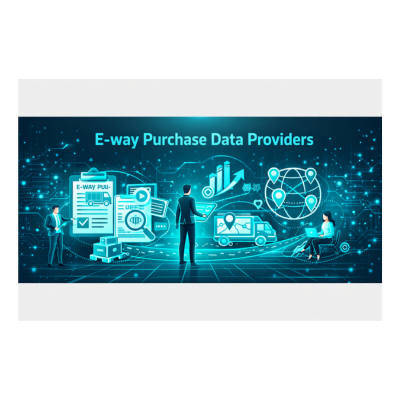
E-way Purchase Data Providers provides a comprehensive record of goods’ movements, helping businesses manage their supply chain more efficiently and ensuring compliance with tax regulations.
In today’s rapidly evolving digital marketplace, understanding consumer behavior, tracking purchasing patterns, and ensuring efficient supply chain management have become essential for businesses. One of the critical components enabling businesses to gain this understanding is the E-way purchase data. This data provides valuable insights into purchasing trends and behaviors, helping organizations make informed decisions. But where can businesses get this data? That’s where E-way purchase data providers come into play.
What is E-way Purchase Data?
Before diving deeper into how these data providers work, let’s first understand what E-way purchase data is. This data typically includes information related to the transactions of goods, such as:
Buyer and seller details
Product specifics
Quantity and price
Shipping details
Taxation information
E-way purchase data is primarily generated through e-way bills, a digital documentation system used in many countries like India to track the movement of goods during transport. This data provides a comprehensive record of goods’ movements, helping businesses manage their supply chain more efficiently and ensuring compliance with tax regulations.
The Role of E-way Purchase Data Providers
E-way purchase data providers collect, process, and sell access to this valuable data. They typically work by aggregating data from various e-way bills issued for purchases across a particular region, category, or market segment. This data is then cleaned, categorized, and made available for businesses to purchase.
By leveraging E-way purchase data, companies can access an enormous amount of transactional data that can be analyzed for different purposes. These providers often offer the data in different formats such as spreadsheets, databases, or through direct access to an API for integration into your existing systems.
How E-way Purchase Data Can Benefit Your Business
Using E-way purchase data effectively can offer numerous advantages for businesses, regardless of size or industry.
1. Gain Insights into Consumer Behavior
Knowing what products are being bought, when, and by whom can provide invaluable insights into consumer behavior. This data allows businesses to identify trends, such as peak buying times or popular products. For example, if a product is being frequently bought together with another, a business can use this information to create bundled offerings or marketing campaigns targeting similar consumer groups.
2. Enhance Supply Chain Management
E-way data provides granular details about the movement of goods. This data can be used to identify bottlenecks in the supply chain or inefficiencies in logistics. By analyzing purchasing patterns and delivery times, businesses can streamline their operations to ensure faster and more reliable service to their customers.
3. Improve Pricing Strategies
By analyzing purchase data across various sectors, businesses can benchmark their pricing strategies against their competitors. If a competitor is offering a similar product at a lower price, businesses can adjust their pricing to remain competitive in the market. E-way purchase data can also reveal if certain products are priced at a premium in certain regions, offering businesses an opportunity to target underserved markets.
4. Predict Future Trends
E-way purchase data provides businesses with the ability to forecast future trends. By analyzing past transactions and market patterns, businesses can predict which products will be in demand in the future. This predictive insight can help companies make proactive decisions, like ramping up production or adjusting their inventory accordingly.
5. Compliance and Taxation Insights
In countries where the e-way bill system is mandatory, businesses can ensure they remain compliant with the government’s tax regulations by accessing E-way purchase data. This data helps businesses track and verify taxes paid on purchases, reducing the risk of penalties due to non-compliance.
How to Choose the Right E-way Purchase Data Provider
When looking for an E-way purchase data provider, it’s crucial to evaluate several factors to ensure you’re getting high-quality, relevant data. Here are some things to keep in mind:
1. Data Accuracy
The quality of the data is paramount. Ensure that the provider collects data from reliable sources and that the information is up-to-date. Data inaccuracies can lead to poor business decisions and missed opportunities.
2. Coverage and Granularity
Depending on your business needs, you may want detailed data about a particular region, industry, or market segment. Look for a provider that offers comprehensive coverage in your area of interest. The more granular the data, the more precise your analysis will be.
3. Ease of Access
Consider how easy it is to access the data. Some providers offer a user-friendly dashboard, while others might require you to use technical APIs for integration into your systems. Choose a provider whose access model aligns with your team’s capabilities and needs.
4. Pricing
While it’s important to find a provider that offers competitive pricing, remember that the cheapest option might not always be the best choice. Look for a provider that offers a good balance between cost and quality of data.
5. Customer Support
Good customer support can be a game-changer when it comes to troubleshooting data-related issues. Choose a provider that offers reliable customer service, whether through chat, email, or phone support.
How to Use E-way Purchase Data Effectively
To get the most out of E-way purchase data, businesses should integrate it into their existing systems. This can include:
Data Analytics Tools: Use tools like Tableau or Power BI to visualize and analyze the data, which helps identify trends and make data-driven decisions.
CRM and ERP Systems: Integrate the data into your Customer Relationship Management (CRM) or Enterprise Resource Planning (ERP) system for better customer service, inventory management, and financial planning.
Marketing and Sales Campaigns: Leverage data to create personalized marketing campaigns. If you notice specific purchasing behaviors, tailor your promotions to meet those preferences.
Conclusion
In conclusion, E-way purchase data plays a crucial role in modern business strategies. By leveraging the right data from reliable E-way purchase data providers, businesses can enhance their decision-making, improve supply chain efficiency, and gain a competitive edge in their market. Whether you’re looking to understand consumer behavior, optimize your pricing strategy, or predict future trends, this data can be the key to your success. Make sure to choose a provider that aligns with your business needs, and start harnessing the power of E-way purchase data to drive growth and profitability.
Our Other Related Articles